Mahjong Solitaire Online
Match free tiles in pairs to clear all 144 tiles from the board. Choose from five formations, each starting with a verified solution. Your pair choices still matter: a legal match can leave the remaining tiles blocked. Play above without a download or account.
Which tiles can you match?
Click or tap two matching tiles that are both free. A tile is free when nothing overlaps it from above and at least one of its left or right sides is open. Both conditions must hold. Space above or below a tile on the screen does not count as an open side.
Blocked tiles appear dimmer and cannot be selected. Even a tile that only partly covers another tile prevents that lower tile from being free.
| Pair | Can it match? |
|---|---|
| 2 of Circles + 2 of Circles | Yes: the type and number match. |
| 2 of Circles + 2 of Bamboo | No: the number alone is not enough. |
| Spring + Winter | Yes: any two Seasons match. |
| Plum + Orchid | Yes: any two Flowers match. |
| Spring + Plum | No: a Season does not match a Flower. |
Winds and Dragons must match their own symbol, too: East matches East, and a Red Dragon matches another Red Dragon.
Two examples of opening the board
These small diagrams illustrate tile positions. The letters identify positions, not matching tile faces.
1. Only one horizontal side needs to be open
If another tile also covered B from above, removing A would not be enough. You would need to remove that upper tile as well. Check both the side blockers and the layers before choosing a pair.
2. Matching the wrong two tiles can trap their partners
Before removing an easy pair, look for its other copies. Prefer a pair that releases a needed partner or opens a blocked section. A starting deal with a solution can still reach a dead end after a different choice, as this example shows.
Choose a formation
The Formation selector offers Pyramid (Easy), Turtle (Classic), Fortress (Medium), Bridge (Hard), and Dragon (Expert). Every formation uses 144 tiles, so each game takes 72 matches to clear. The arrangement of layers and side blockers changes the challenge.
Start with Pyramid if you want to learn how tiles become free, or choose Turtle for the classic arrangement. Changing Formation starts a new deal. Use New Game when you want another deal in your current formation.
Hints, counters, and getting unstuck
- Hint highlights a legal pair and favors pairs that open more tiles. Repeated presses cycle through available pairs. Each hint costs 5 points, with the score stopping at zero; it does not guarantee that the whole board can be cleared from that choice.
- Matches shows how many pairs you have removed out of 72.
- Available pairs, beside the double-arrow symbol, counts possible pairs right now. Three free identical tiles make three possible pair combinations, even though you can remove only one pair before the position changes.
- Undo puts the last matched pair back in its original positions and reverses the points earned by that match.
When there are no matching pairs left, the game offers these choices:
- Undo: revisit your last choice if a previous move is available.
- Shuffle: rearrange the remaining tile faces into a solvable position. Removed tiles stay removed. This costs 25 points, with the score stopping at zero, and clears the Undo history.
- Restart: return to the original deal and begin again with your progress and counters reset.
Common questions
Why will two identical tiles not match?
Check whether both are free. An identical face cannot be selected if another tile overlaps it from above or if both horizontal sides are blocked. See the side-blocking example.
Does a solvable starting deal mean any pair will work?
No. The initial arrangement has a verified route to completion, but another order of matches can trap tiles. Undo lets you reconsider a choice; the no-moves controls also offer Shuffle and Restart.
Is this the four-player Mahjong game?
No. This is the single-player tile-matching puzzle: remove free pairs until the board is empty.
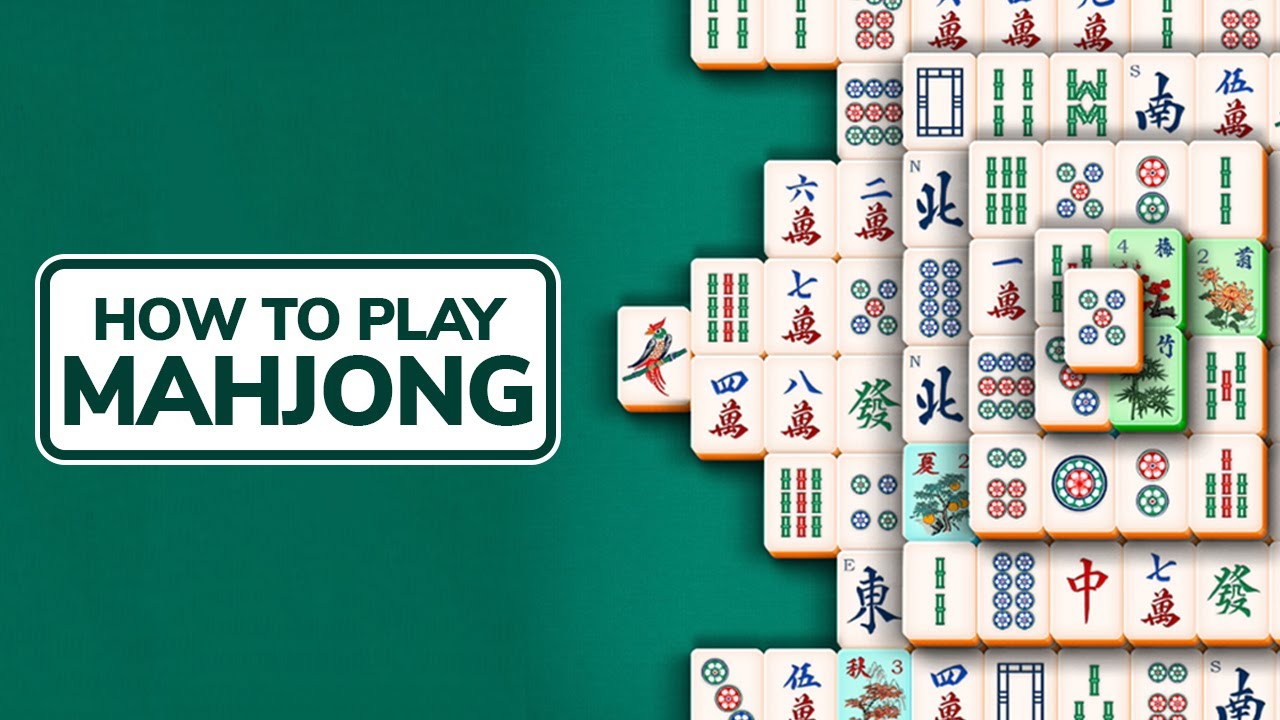
Watch a Mahjong Solitaire tutorial
Try the same planning habit with cards
If you enjoy thinking about what a move will unlock, try FreeCell Solitaire: every card is visible, but access depends on the cards below it and your spare space. Its three-card move example shows how temporary storage helps. For a game about building runs, play Spider Solitaire and compare mixed-suit and same-suit runs. You can also return to classic Klondike Solitaire.
Want a different card game? Play one of these!

Klondike Solitaire (Classic)
The timeless solitaire card game. Build tableau stacks in descending rank with alternating colors and move cards to the foundations by suit from Ace to King. Ideal for quick sessions and classic gameplay fans.
Play KlondikeSpider Solitaire
A deep, strategic solitaire card game played with two decks. Build same–suit sequences from King to Ace across 10 columns. Try One Suit, Two Suits, or Four Suits difficulty for increasing challenge.
Play SpiderFreeCell
An open–information solitaire card game where planning is everything. Use four free cells to stage moves, create empty columns, and build foundations by suit. Great for players who enjoy strategy and foresight.
Play FreeCell


